


The Restoration of Rangers Graves Project, John Wilkie Rangers FC 1898-1902 an “ Invincible” and The Melbourne City Loyal RSC.


The Restoration of Rangers Graves Project, John Wilkie Rangers Football Club 1898-1902 an “ Invincible” and The Melbourne City Loyal RSC.
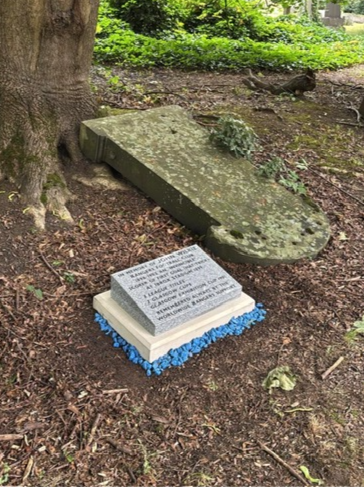
As we continue our search for the final resting place of every player from the 1899 “Invincibles” team we’re delighted to say that we located yet another,this time in the Eastern Necropolis Glasgow. Sadly it was unmarked but this has now been rectified.

We’d like to sincerely thank our friends at The Melbourne City Loyal RSC for meeting the entire cost of this restoration. Your generosity is overwhelming.
Thank you.

John Wilkie scored the first ever goal and hat trick at Ibrox Stadium against Hearts on 30th December 1899. For this he was presented with a gold watch which he gave to trainer James Wilson.
Many thanks to David Herd for the following.
Sometimes in football there comes along a partnership that just seems right. Over the years, Rangers have had many great pairings in both defence and attack.
One such pairing involved two players whose telepathic understanding on the field meant several clubs brought them together in search of success. Their names were John Campbell and John Wilkie.
John (or Johnny) Campbell was born Govan on October 2nd 1877. His football career started in the junior game like so many others of the time, at Renton United, before he joined Govan club Linthouse in 1893 aged just 16. A quick left footed winger with an eye for goal, he was soon being watched by bigger clubs and in 1894 he joined second division Partick Thistle. His debut came in the opening match of Thistle's league campaign, scoring in a 5-2 win over Dundee Wanderers. The inside forward beside him that day also making his debut was John Wilkie.
John Wilkie (known also as James or Jack Wilkie) was another Govan boy, born the November before Campbell. He started out at Summerton Athletic before joining Thistle also in 1894. Although not a particularly successful season was to come, Partick finishing 8th in the 10 team league, the two teenagers formed an entertaining and productive partnership for them which was given the nickname "The Babes" by the Thistle supporters. Neither player missed many matches that season, Wilkie being the more productive with 9 goals from his 21 starts.
But the partnership was to be broken up after only one season when Blackburn Rovers of the first division took Wilkie down south in the summer of 1895. Wilkie enjoyed a solid 8th place finish in his debut season with them, while Campbell helped Thistle to an improved 5th place in the Scottish second tier. But neither player seemed to hit their consistent best, and in the close season of 1896 Rovers decided to reform The Babes to see if this would improve their fortunes. The partnership made their first league appearance in over a year against West Brom, and over the following two seasons the Rovers line-up invariably ended with "Wilkie and Campbell". But despite their efforts, and a fair goalscoring return, Rovers were a shadow of their former glories as they had a defence that leaked a serious number of goals. They finished 1896/97 just above the relegation playoff places and were in serious relegation trouble in the following season, only surviving when the league was expanded.
By now, Campbell had 10 goals in 56 Rovers starts, while Wilkie had 17 goals in 75 appearances. neither player was enjoying their football in Lancashire, and Campbell and Wilkie were given their chance to return north in August 1898 and both signed for Rangers. This was a Rangers on the verge of becoming the dominant team in the country, but despite winning the last two Scottish Cups they hadn't been crowned Scottish champions since the first season of league football in 1980/91.
Both players made their debuts in Royal Blue on August 27th 1898, the second league game of the season. It was to be a second victory, club legends Alec Smith, RC Hamilton and John McPherson all scoring in a 3-1 success away to St Mirren. Smith was still the club's first choice left winger, so Campbell played on the right meaning that the partnership was not quite the same as before. Both lined up again the following week when Wilkie got his first Rangers goal in a 3-2 win at Hearts. Three wins from three,but nobody could have thought just what a historic season was beigining to unfold. But it was a season where Campbell was to enjoy far greater success out the two.

Previously injured inside forward Jimmy Millar regained his place in the side after the Hearts game, meaning Wilkie only featured occasionally. Campbell scored his first Rangers goal the following week in a comfortable home win over Third Lanark, and his displays attracted the national team selectors before the season ended. Campbell played in 16 of the 18 league games that 1898/99 season, when Rangers incredibly went through the entire campaign without dropping a single point. He scored in a 4-0 hammering of Celtic at Parkhead, he got four in a 5-2 rout of St Bernards, and he scored again in the return Old Firm fixture on January 2nd at Ibrox when RC Hamilton claimed a hat trick. On 7th January 1899, Rangers defeated Clyde 3-0 to win their 18th and final league game of the season and to make history, with Campbell starring on the right wing. Meanwhile, Wilkie was a patient and able deputy, returning to the team for the Glasgow Cup semi final win over Celtic and scoring a crucial league goal in a hard fought 2-1 win at Dundee. He was to feature in the end of season Glasgow League fixtures, and scored his first goal against Celtic in a defeat in that competition in May 1899.
Campbell made his Scotland debut on March 18th of that year, scoring twice in a 6-0 thrashing of Wales. He scored another double the following week in a 9-1 rout of Northern Ireland, before tasting defeat against England in April in a 2-1 reverse. He would only win one more cap, and scored two more in February 1901 in Scotland's record win, an 11-0 embarrassment over Northern Ireland. His international career read played four scored 6 and in those four games Scotland scored a scarcely believable 27 goals.
Despite the incredible league 100% record Rangers would fail to bring home any of the cup competitions, with Campbell playing in losing finals against Queens Park in the Glasgow Cup, and Celtic in both the Scottish and Charity Cups.
Season 1899/1900 saw Rangers retain the league title, and also saw the old Campbell-Wilkie partnership starting more often. Wilkie played more games over the season this time, mainly due to an injury to Campbell, and in several games they played right wing and inside right together. Campbell had started the season on fire, scoring 5 times in the first four league games. But he missed almost all of October to March. Meanwhile, Wilkie was showing what he was capable of when given a run in the team. He scored a vital goal in a 1-1 draw against Celtic in the Glasgow Cup Final in November, and claimed a winners medal in the replay thanks to a Bobby Neil penalty. he hit 18 goals in just 23 appearances that season, with hat tricks against Hearts in the Inter City League and against Maybole in the Scottish Cup. His 6 goals in 11 league games meant he thoroughly deserved his winners medal, as Rangers retained their crown.
Campbell, however, only played in seven league matches, also scoring 6 times. He missed the Glasgow Cup success but played in the end of season Charity Cup Final, scoring in a memorable 5-1 hammering of Celtic.
Season 1900/01 was something of a disappointment for the players, although the club again brought the title back to Ibrox. Campbell suffered injury and was unable to reclaim his place in the team when fit, and Wilkie was sent on loan to new English Second Division club Middlesbrough. Wilkie claimed a place in their history when on March 2nd 1901 he scored the club's first ever league hat trick, bagging 5 goals in a 9-2 win over Gainsborough Trinity. But the following season, Campbell was back fit, Wilkie was back at Ibrox and they had one last successful season together at Rangers.
Campbell started 12 league games and 21 overall, scoring 5 times. The highlight a terrific strike in a memorable 4-2 win at Parkhead on New Years Day 1902. Wilkie started 14 league games, and 22 overall, scoring 6 times. His included a goal in the drawn Glasgow Cup final against Celtic, although he missed the replay. By the summer of 1902, both players had three league medals, and both had enjoyed cup final wins over Celtic. But 1902 saw the terrible tragedy of a disaster and loss of life at the stadium during a Scotland v England international, and the club, desperate for funds to both rebuild the stadium and also to pay compensation to victims' families, put every player up for sale.
Johnny Campbell, after 70 appearances and 32 goals, was sold to West Ham United. John Wilkie, after 29 goals in 61 appearances, was sold to his old club Partick Thistle.They had started together 35 times for Rangers. It seemed that was the end of "The Babes" together, almost a decade after they first took to the field in the same team.
Campbell scored once in 18 starts for Southern League West Ham before returning to Scotland in 1903 to play for newly crowned champions Hibernian. He stayed there for 3 seasons. Wilkie scored 11 times in 31 further Partick Thistle appearances before in the summer of 1905, he was also signed by Hibs. The old partnership would be together one last time. They only played five times together for Hibs, as both players were now reaching the end of their top level careers. But they did feature together against Rangers on September 11th 1905, when Campbell scored but couldn't prevent their old club winning 2-1. Their last ever game together was the following month, a drab and dismal 2-1 defeat to Falkirk, with Wilkie scoring the consolation goal. Hibs were struggling for consistency and sold both players soon afterwards.
Campbell went back south to play briefly for New Brompton (now known as Gillingham) before an emotional return to Partick Thistle in 1906. He had just been married and stated that this was him now "returning home". But time had caught up with him, and he drifted out the game after spells with Bo'ness and Dumbarton Harp, finally retiring in 1910.
He then embarked on a whole new career, becoming a ship's steward and sailing the high seas. Sadly, this was not for as long as he had hoped, as in January 1919 John Campbell contracted TB and died aged just 41.
Wilkie left Hibs under a cloud, suspended and transfer listed for indiscipline at training. He left to join Ayr Parkhouse before also drifting out the game.
He married twice, the second time in 1918 when the marriage certificate gave his occupation as a shipyard labourer. Sadly, he also died young, passing away in 1922 aged only 45.
Two sons of Govan born less than a year apart. A partnership at four different clubs,after making their professional debuts the same day.
Goalscorers in both divisions in Scotland, and in England.
Contributed to the legendary Rangers 100% league season.
Both scored against Celtic in cup finals.
And both passed away in their 40s.
John Campbell and John Wilkie.
As Old Blue Eyes once sang, "You can't have one without the other".


Comments